The problem this book solves
Gluten-free cooking is not a shortage of recipes. It is a shortage of certainty at the exact second you are holding a jar.
You already know bread has gluten. Nobody needs a book for that. What catches people is the baking powder cut with wheat starch, the soy sauce brewed with wheat, the stock cube, the malt in the vinegar, the “natural flavoring” on a spice blend. These are the ingredients that end up in a recipe unremarked, because the author assumed you would remember a note from page four.
This book does not assume that. Every processed ingredient in every recipe carries its own qualification, on its own line, in the list you are reading while you cook.
How it was checked
An ingredient-by-ingredient pass across the whole book.
Not a spell-check. Every recipe was read line by line and every processed ingredient was either qualified or corrected: the baking powder marked certified gluten-free, the soy sauce replaced with tamari, the stock named as the kind without a wheat carrier.
The free starter kit is written exactly the same way, so you can see the method before you spend anything.
Inside the book
Six chapters, then a thousand recipes.
- 1Where to Start The first week, and what actually changes.
- 2Setting Up the Kitchen Shared toasters, pans, pasta water, and what has to be separate.
- 3Reading the Label US, UK and EU rules, and why “contains: wheat” is not a gluten check.
- 4Flours and Binders What each flour does, and how blends behave.
- 5The Ingredients That Need Checking The reference chapter, laid out in supermarket order.
- 6Eating Out and Traveling The questions that decide whether a meal is safe.
Then a thousand recipes across twelve categories
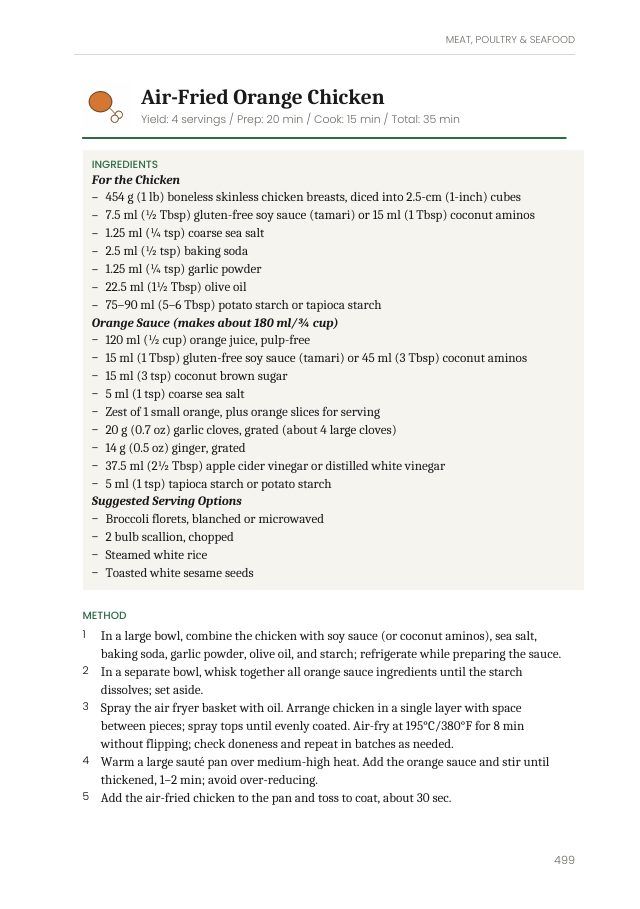
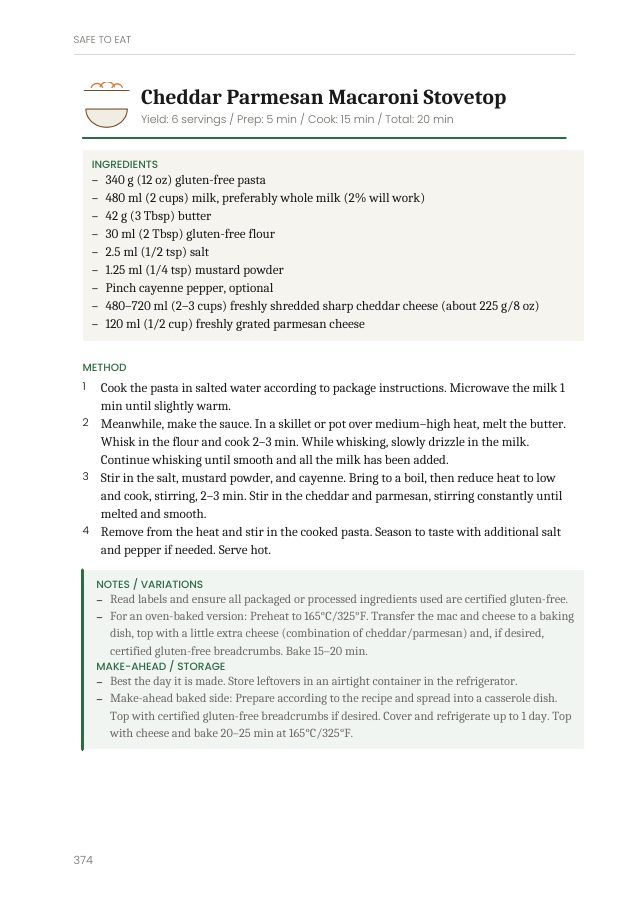
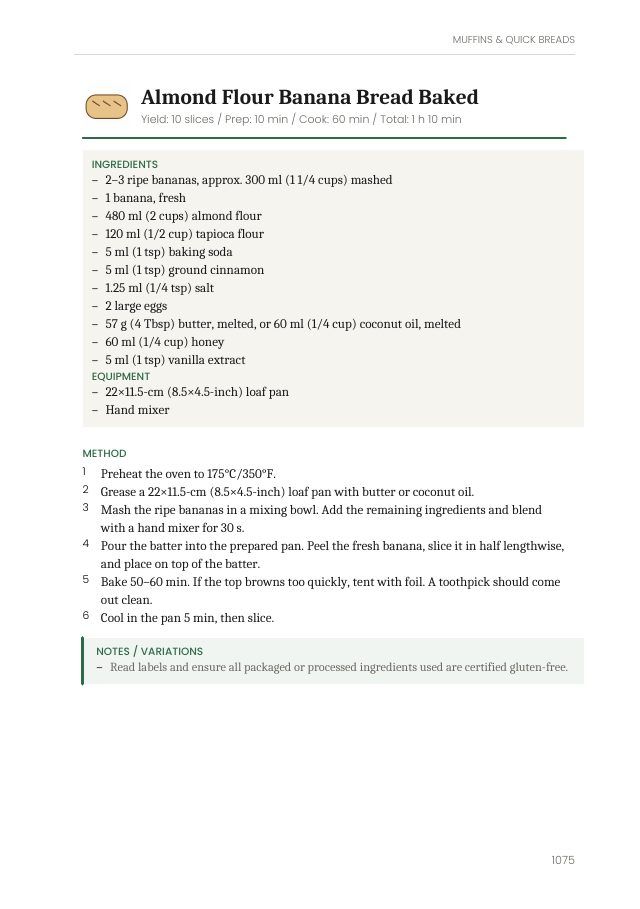
Every recipe gives yield and timings, both metric and US measurements, and there is a full alphabetical index at the back.
Look inside
Free · 42 pages
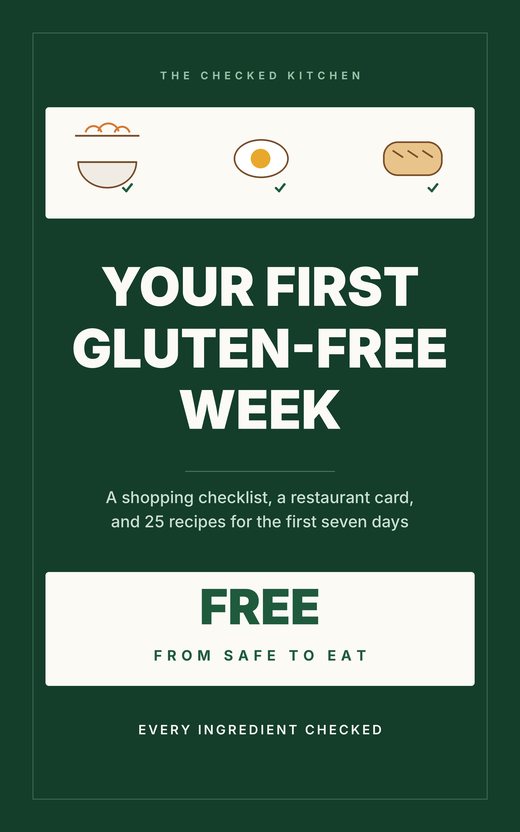
Your first gluten-free week, already decided.
Seven days of meals, a shopping list arranged the way a shop is arranged, and a card for restaurants. 42 pages, drawn from the same book, so you can judge the method before you buy it. One email address, and one click to leave the list again.
Get the free weekIntroductory price
Safe to Eat
$29
A thousand recipes · 1,692 pages · six reference chapters · a full index · EPUB and PDF
Discount already appliedInstant download 30-day refund
No code to type — the introductory price is applied for you. Your country’s tax, if any, is added at the checkout and shown before you pay.
Before you buy
Questions worth asking
How many recipes exactly?
A thousand is the number we promise, and it is rounded down: the book contains 1,032. Down is the only honest direction to round. Every figure here was counted rather than estimated — the recipes, the categories, the 126 recipes that call for baking powder — and rounding down is what that habit looks like on a cover.
Does the book have photographs of the food?
No. It is illustrated rather than photographed. A photo beside a recipe makes an implicit promise about how yours will look, and this is a book you cook from rather than look at. That choice is also why it costs a fraction of what a photographed cookbook costs.
Is the book certified gluten-free?
No, and no cookbook can be. Certification marks such as the Crossed Grain or the GFCO mark apply to food products made in audited facilities. They are not issued to books, and anyone showing one on a cookbook cover is misusing it. What this book does is tell you which products in your kitchen need to carry that mark.
Does the title mean the food is guaranteed safe?
No. Nothing printed can guarantee that, and this book does not claim to. The title describes what the book is for, not a promise about your kitchen. Safety in practice depends on three things the book cannot control: the product you buy, the surfaces you cook on, and your own threshold. What the book guarantees is narrower and checkable: every processed ingredient carries its qualification on its own line, so you always know what to verify.
Can I trust a cookbook that was not written by a doctor?
It is a cookbook, not medical advice, and it says so plainly on the copyright page. It does not diagnose, treat, or replace your dietitian. Its claim is narrow and testable: every processed ingredient is qualified on its own line, and the reference chapter explains what each check is for.
Metric or US measurements?
Both, in every recipe, on every line. 240 ml (1 cup), 120 g (4.2 oz). There is no conversion table at the back to flip to.
What formats do I get?
EPUB and PDF, both in the same purchase. The EPUB reflows on a Kindle, phone, or tablet. The PDF is laid out for a larger screen, or for printing the pages you use most.
Is there a paperback?
No. At 1,692 pages it is past the limit any print-on-demand service will bind, and splitting a reference book into volumes makes the index useless. It was built as a digital book on purpose.
What if it turns out not to be for me?
Read the free 42-page starter kit first. It is drawn from the same book and written the same way. If it is not what you want, the book will not be either, and you will have spent nothing. If you do buy and change your mind, write to us within thirty days and we will refund it.
New · free · in season
57 gluten-free Halloween recipes
Party food, dinner, sweets and drinks — and the six ingredients that catch people on the one night of the year built out of food nobody checks.
Get the 57 recipes — free